

Calcite," which gets its name from ""chalix"" the Greek word for lime", is a most amazing and yet, most common mineral.

A. Lincoln Sherk MD. collection 1890s-1969
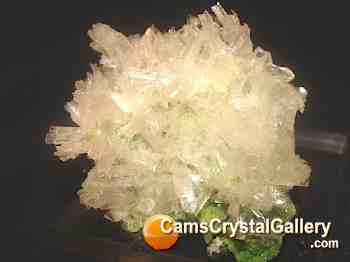
A very unique combination of hemimorphite, conichalcite, and smithsonite. Need a loop to see the smithsonite.

This is a nice specimen from the classic location at Mapimi, Mexico. The rosasite really adds nice color and contrast and displays well.
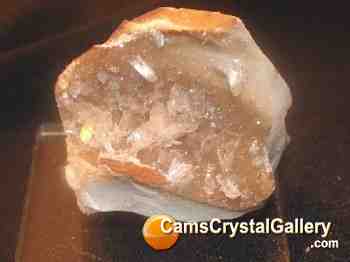
The hemimorphite from this location are well known for their delicate clear crystals that form beautiful sprays on the limonite matrix.

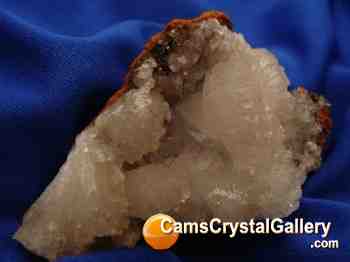
This is an another uncommon combination of hemimorphite in a red bed of carminite.

Location: Mapimi, Mexico

The hemimorphite from this location are well known for their delicate clear crystals that form beautiful sprays on the limonite matrix.

The hemimorphite from this location are well known for their delicate clear crystals that form beautiful sprays on the limonite matrix.

The hemimorphite from this location are well known for their delicate clear crystals that form beautiful sprays on the limonite matrix.

A superb specimen of Hemimorphite. The large spray of crystals are about 1 inch in length.

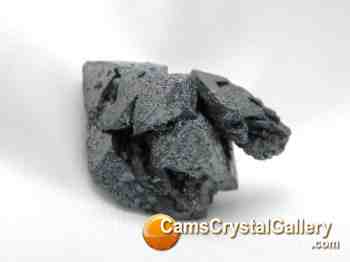
This Piece of Hematite Pseudomorph after Magnetite is in amazing condition.

Location: Patagonia, Argentina

This Piece of Hematite Pseudomorph after Magnetite is in amazing condition.

Unfortunately in order to show the great crystal structure in the picture I had to sacrifice showing the amazing shine covering the entire piece. ...
Location: Patagonia, Argentina

If you look at this very nice hematite, you will see my hand and camera reflected. That is how shiney this hematite is.
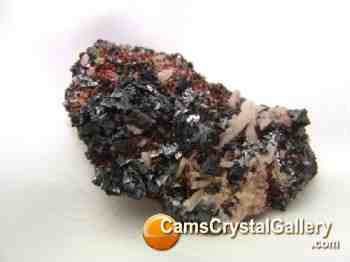
This piece has a great color contrast and looks great! There is very light, unnoticeable damage to some of the crystals.

This is a nice little piece of clear Gypsum, also known as Selenite.


Gypsum is a soft mineral, hydrous calcium sulfate. Gypsum is the standard for hardness degree 2 on the Mohs mineral hardness scale.

Gypsum forms concretions of selenite blades called desert roses or sand roses, growing in sediments that are subjected to concentrated brines.

Gypsum forms concretions of selenite blades called desert roses or sand roses, growing in sediments that are subjected to concentrated brines.


